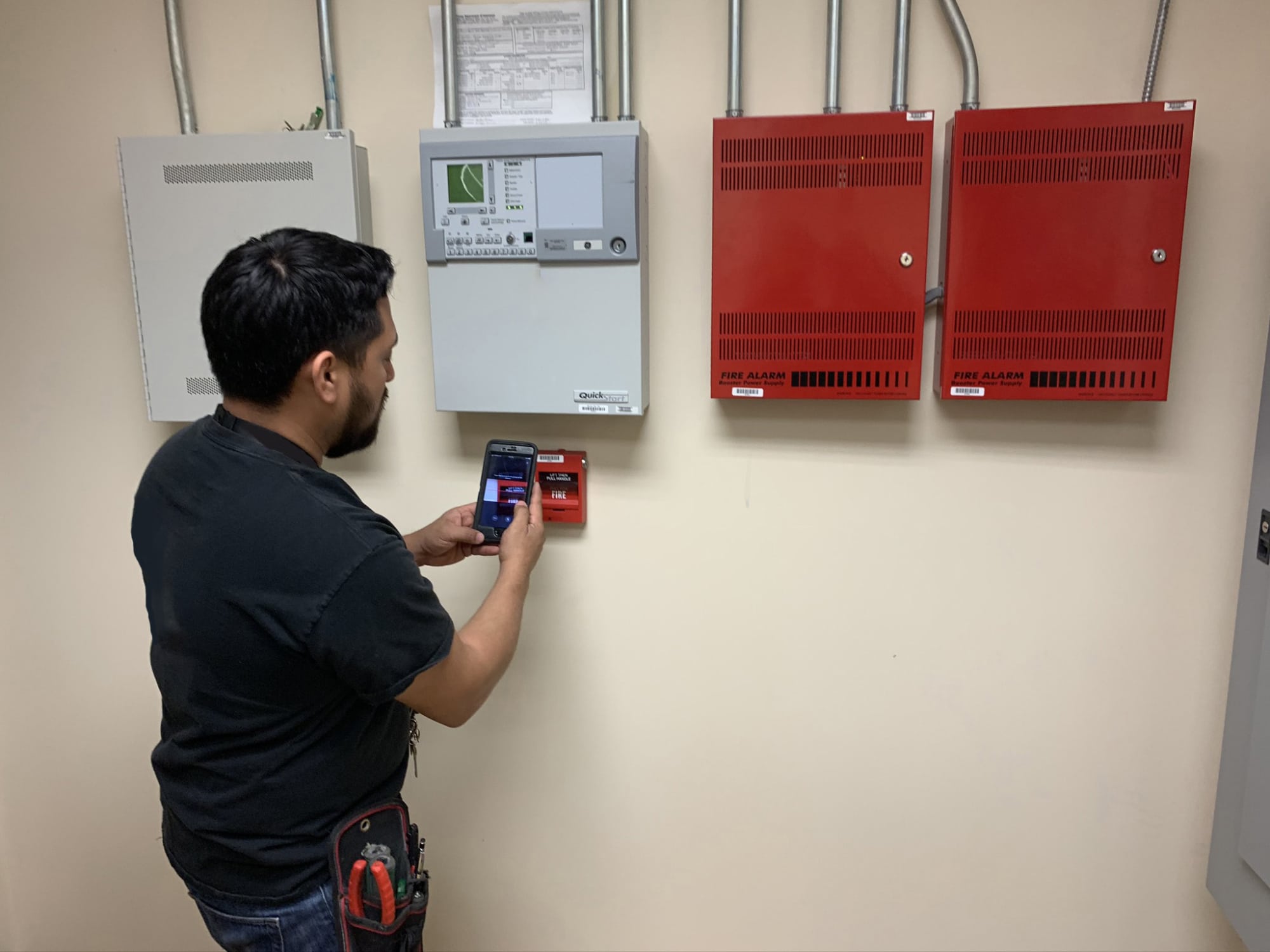
Fire and life safety inspections depend on accuracy. When technicians inspect thousands of devices across large facilities—manual pull stations, smoke detectors, sprinkler valves, extinguishers, and more—keeping track of each device and its inspection history can quickly become complex.
For many inspection companies and facility managers, device barcoding has become one of the most effective ways to improve accuracy, streamline inspections, and maintain reliable documentation. When implemented properly, barcode systems reduce human error, speed up inspections, and provide clear traceability for every device in a facility.
This article explores how device barcoding works, why it matters, and the best practices organizations should follow to maximize efficiency.
What Is Device Barcoding?
Device barcoding is a system that assigns a unique barcode label to each fire protection or life safety device within a building. The barcode is scanned during inspections using a mobile device or tablet, instantly identifying the device within the inspection platform.
This allows technicians to quickly access information such as:
- Device type and location
- Inspection history
- Previous deficiencies or repairs
- Testing requirements and schedules
- Notes and documentation
Instead of manually searching through device lists or writing down serial numbers, technicians simply scan the barcode and record inspection results instantly.
Why Barcoding Matters for Fire and Life Safety Inspections
Large commercial and healthcare facilities may contain hundreds or even thousands of devices. Without a reliable identification system, inspection processes can become slow and prone to mistakes.
Barcoding provides several important advantages.
Improved Accuracy
Manual entry of device numbers or locations increases the risk of errors. Scanning a barcode ensures the technician is recording results for the correct device every time.
Faster Inspections
Technicians can quickly move from device to device without searching through long device lists or paper inspection sheets.
Consistent Device Identification
Barcodes create a standardized method of identifying devices across teams, buildings, and inspection cycles.
Reliable Inspection History
Each barcode links to a specific device record, allowing organizations to maintain a complete inspection and maintenance history.
Better Compliance Documentation
Accurate device identification helps ensure inspection reports are clear, traceable, and defensible during audits or regulatory inspections.
Best Practices for Implementing Device Barcoding
While barcoding offers clear benefits, the success of a barcode program depends on thoughtful implementation. The following best practices help organizations maximize the value of barcode-based inspections.
1. Assign a Unique Barcode to Every Device
Each fire protection device should have its own unique identifier. Avoid sharing barcodes between devices or using generic labels.
Unique device IDs ensure that:
- Inspection history is accurate
- Deficiencies are associated with the correct device
- Reports remain consistent across inspection cycles
Over time, this unique identification system becomes the backbone of a reliable inspection database.
2. Use Durable, Long-Lasting Labels
Fire protection equipment often operates in demanding environments—mechanical rooms, parking garages, industrial facilities, or outdoor areas.
Barcode labels should be:
- Heat-resistant
- Moisture-resistant
- Scratch-resistant
- Easy to scan
High-quality labels reduce the need for frequent replacement and prevent scanning issues during inspections.
3. Place Barcodes in Visible, Consistent Locations
Barcode placement should be consistent across devices whenever possible. Technicians should not need to search for the label before scanning.
Good placement practices include:
- Positioning the barcode where it is easily accessible
- Avoiding placement on moving components or covers that are frequently removed
- Ensuring the label does not interfere with device operation or required markings
Consistency in placement helps technicians work faster and improves inspection efficiency.
4. Maintain Accurate Device Location Information
While barcodes identify individual devices, clear location descriptions remain important for inspections and reporting.
For example:
- “Smoke Detector – Corridor Outside Room 214”
- “Manual Pull Station – South Stairwell Level 3”
- “Sprinkler Control Valve – Mechanical Room B”
Combining barcode identification with detailed location information makes reports more useful for facility managers and technicians performing repairs.
5. Train Technicians on Barcode Workflows
A barcode system is only effective when technicians understand how to use it properly.
Training should include:
- Scanning devices during inspections
- Confirming device information before recording results
- Reporting damaged or missing barcode labels
- Updating device records when equipment is replaced
Consistent technician training ensures barcode workflows remain reliable across inspection teams.
6. Integrate Barcoding with Inspection Software
Barcoding delivers the most value when integrated with a digital inspection platform that tracks devices, inspections, and deficiencies in real time.
With integrated systems, scanning a barcode can automatically:
- Load the correct device record
- Display previous inspection history
- Record test results instantly
- Log deficiencies if problems are identified
This creates a streamlined inspection workflow that eliminates unnecessary steps and reduces documentation errors.
How fireNspec Supports Barcode-Based Inspections
fireNspec was designed to support modern inspection workflows, including barcode-based device management.
Technicians using fireNspec can:
- Scan device barcodes directly from a tablet or mobile device
- Access device records instantly
- Record inspection results quickly and accurately
- Track deficiencies tied to specific devices
- Maintain a complete inspection history for every device
Because fireNspec does not charge fees for barcode scans or device counts, organizations can track as many devices as needed without additional cost, making the platform ideal for large campuses, healthcare facilities, and industrial environments.
Accuracy That Scales with Your Inspections
As inspection programs grow, the ability to track devices accurately becomes increasingly important. Device barcoding creates a reliable system that ensures every device is inspected, documented, and maintained properly.
By combining barcode identification with modern inspection software, organizations can improve:
- Inspection efficiency
- Data accuracy
- Compliance documentation
- Long-term device tracking
For fire protection companies and facility managers alike, barcoding is not just a convenience—it’s a critical tool for maintaining accurate and defensible fire and life safety inspections.