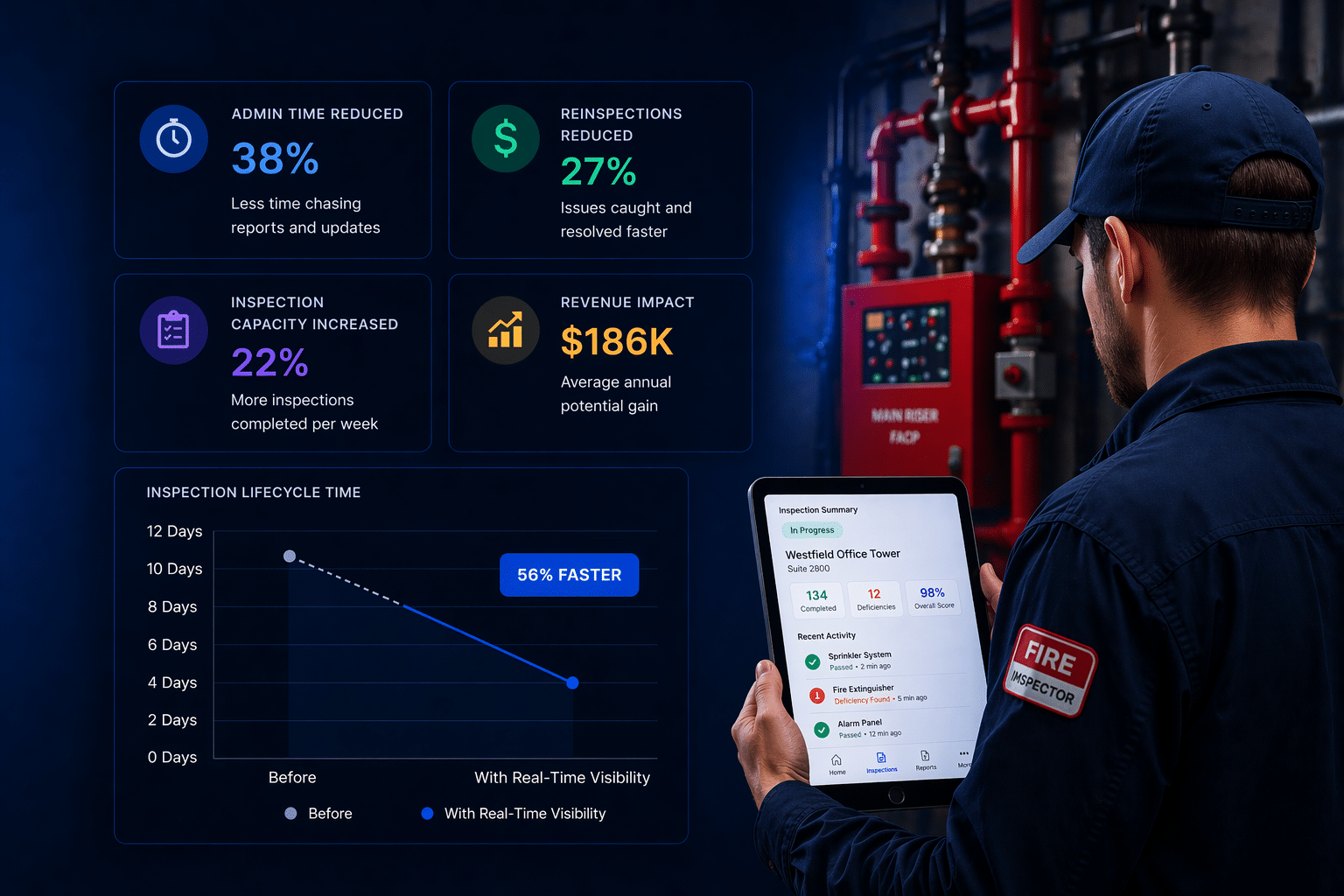
Fire and life safety inspections are designed to identify problems before they become emergencies. During routine inspections, technicians frequently uncover deficiencies—devices that fail testing, components that require maintenance, or conditions that could compromise the performance of a fire protection system.
Identifying deficiencies is only the first step. The real challenge is ensuring those deficiencies are addressed quickly, documented properly, and tracked through resolution. Without a clear process and visibility across teams, deficiencies can linger unresolved, creating compliance risks and safety concerns.
This is where real-time dashboards and centralized inspection platforms play a critical role. By transforming inspection data into actionable insights, dashboards help organizations move from simply documenting deficiencies to driving accountability and resolution across teams.
The Problem with Traditional Deficiency Tracking
Historically, many inspection companies and facility managers have relied on a combination of paper reports, spreadsheets, emails, and disconnected systems to track deficiencies. While these methods may capture the initial issue, they often fail to provide a clear path to resolution.
Common challenges include:
Limited Visibility
Once an inspection report is delivered, deficiencies may be buried in a PDF or spreadsheet. Managers, technicians, and service teams may not have a simple way to see which issues remain unresolved.
Communication Gaps
Deficiency information often passes through multiple teams—inspection technicians, service departments, facility managers, and sometimes third-party contractors. Without a shared platform, important details can be missed.
Delayed Response Times
When deficiencies are tracked manually, it can take days or weeks for someone to identify which issues require action.
Compliance Risk
For organizations operating under standards such as NFPA, CIHQ, or Joint Commission, unresolved deficiencies can become significant compliance concerns during audits or inspections.
The result is a system where issues are documented but not always resolved efficiently.
Turning Inspection Data into Action
Modern inspection platforms are designed to do more than generate reports—they convert inspection data into real-time operational intelligence.
Dashboards allow organizations to visualize critical information immediately after inspections are completed, including:
- Open deficiencies
- Severity levels
- Devices requiring repair
- Inspection completion status
- Service opportunities
- Compliance trends
Instead of searching through reports, teams can instantly see what needs attention and where action is required.
How Dashboards Improve Accountability
Real-time dashboards transform how organizations manage fire and life safety compliance by creating transparency and accountability across teams.
Clear Ownership of Issues
Dashboards make it easy to assign deficiencies to the appropriate team or department. Whether the issue belongs to a service technician, a facility manager, or an outside contractor, responsibility is clearly defined.
Immediate Visibility
As soon as an inspection is completed, deficiencies appear in the system. Managers and service teams can view them instantly, allowing faster response times.
Prioritization of Critical Issues
Not all deficiencies carry the same level of urgency. Dashboards help teams quickly identify high-priority items that require immediate attention.
Progress Tracking
Teams can monitor the status of deficiencies from identification to resolution. This creates a clear audit trail showing that issues were addressed in a timely manner.
Improved Communication
Because dashboards are accessible to multiple stakeholders, everyone involved in the inspection and repair process works from the same information.
Benefits for Fire Protection Companies
For fire system contractors and inspection companies, dashboard-driven workflows offer significant operational advantages.
Faster Service Opportunities
When deficiencies are identified during inspections, dashboards make it easy for service departments to see where repairs are needed and schedule work quickly.
Better Technician Coordination
Inspection technicians and service technicians can work from the same data, reducing confusion and duplication of effort.
Stronger Customer Relationships
Customers appreciate transparency. When they can clearly see inspection results and the status of deficiencies, it builds trust and confidence in the service provider.
Benefits for Facility Managers
Facility managers responsible for fire and life safety systems also gain important advantages.
Improved Compliance Readiness
Dashboards provide clear visibility into compliance status across buildings or campuses. This helps organizations stay prepared for inspections from authorities having jurisdiction or accreditation surveys.
Faster Issue Resolution
With clear tracking and accountability, deficiencies are addressed more quickly—reducing safety risks.
Centralized Documentation
Inspection records, deficiency reports, and repair history can all be stored in a secure digital environment, making them easy to retrieve when needed.
How fireNspec Makes Deficiency Management Visible
fireNspec was designed to give organizations a clear, real-time view of their inspection and deficiency data.
Through powerful dashboards, fireNspec allows teams to:
- Track open deficiencies across sites and systems
- Monitor inspection progress in real time
- Identify service opportunities quickly
- Generate professional reports instantly
- Maintain secure documentation for compliance and audits
By transforming inspection data into actionable insights, fireNspec helps organizations ensure that deficiencies are not just documented—they are tracked, prioritized, and resolved.
From Documentation to Resolution
Fire and life safety inspections are only effective when the issues they uncover are addressed promptly. Without visibility and accountability, deficiencies can remain unresolved, putting both safety and compliance at risk.
Real-time dashboards provide the transparency organizations need to move from identifying problems to solving them.
With clear visibility, defined ownership, and real-time tracking, teams can ensure that every deficiency leads to action—and that every action contributes to a safer environment.